Nea Apollonia Camera
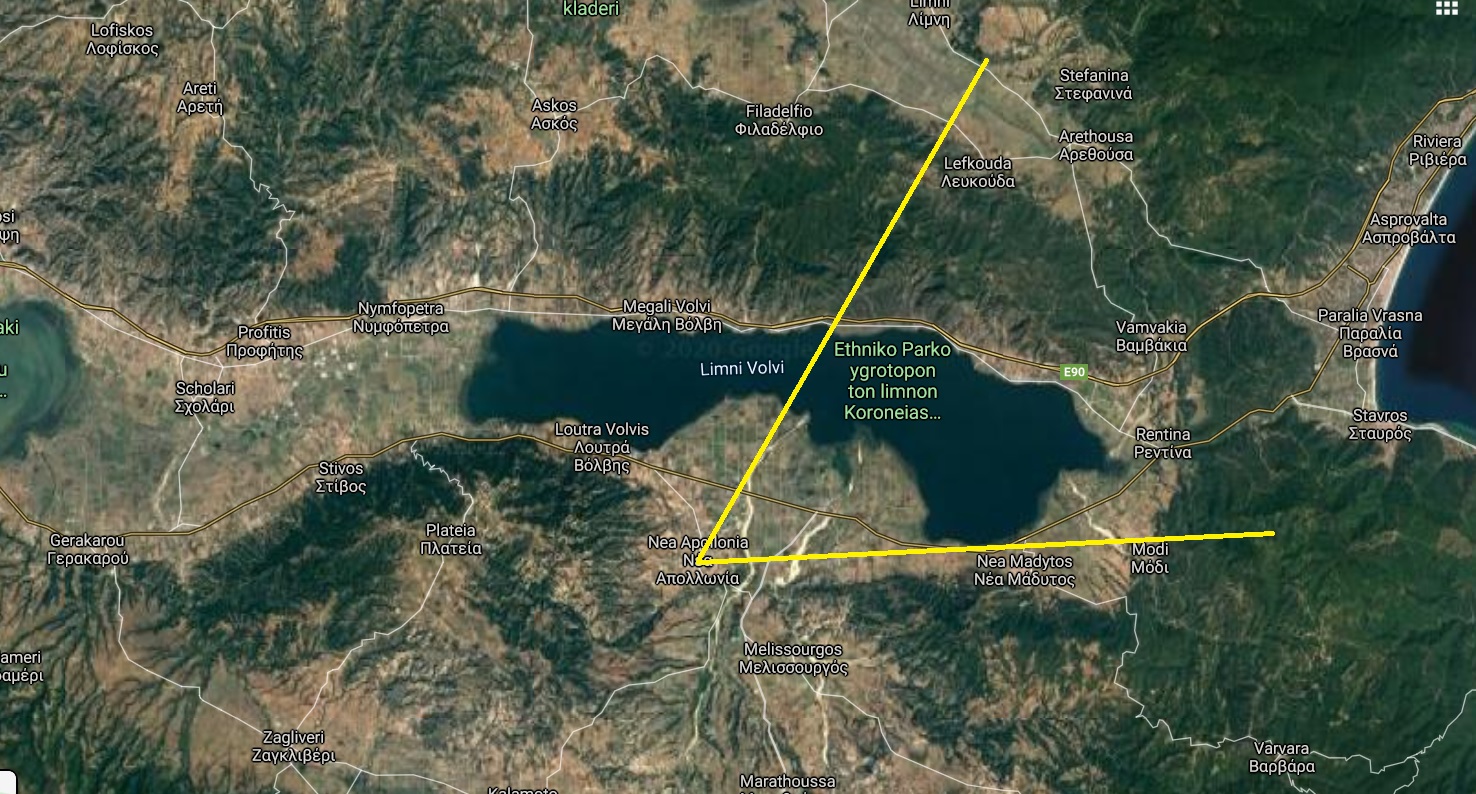
The camera is located in the village of Nea Apollonia, at an altitude of 108 meters looking in a northeastern direction towards Rentina, while in the background are the Macedonian Temples. A beautiful traditional village, just 5 km from the south shore of Lake Volvi.
Property-Hosting: Municipality of Volvi
https://www.dimosvolvis.gr/
(automatic refresh every 2 minutes)
To watch the camera in live streaming, download the FREE "Meteology Live" application by taping the icons below (Google Play or App Store):


|
|
|
|
|
Views

Camera Position
Nea Apollonia is a village in the municipality of Volvi, in the Regional Unit of Thessaloniki. It is located 46 km east of Thessaloniki and 30 km west of Stavros, in the plain of Mygdonia near Lake Volvi, at a distance of 4.5 km from its southern shore.
The village is built west of ancient Apollonia, and significant findings in the wider area show continuous habitation from the Neolithic period to the Roman era. During Ottoman rule, the settlement of Egri Bujak (meaning “curved blade”) was created with the arrival of Yuruks. During the Greek Revolution of 1821, the army of the Macedonian rebels under Emmanouil Pappas captured Egri Bujak and moved west toward Rentina.
They were forced to retreat, however, due to the advance of Bayram Pasha from Eastern Macedonia, who rushed to support the local Ottoman authorities. The most decisive battle for the outcome of the Greek struggle in the region took place in the plain outside Nea Apollonia. It became known as the Battle of Egri Bujak and ended with the Greeks retreating before the numerically superior Ottoman army.
After liberation, in 1913, the village’s thermal baths became the winter residence of nomadic Sarakatsani along with their flocks. Following the Treaty of Lausanne and the population exchange, the Muslim inhabitants moved to Turkey, and Nea Apollonia was settled by Greeks from areas around the Sea of Marmara (the villages of Viga, Axaz, Dermentziki, and Prussa of the Troad in Asia Minor), as well as from villages in the Dardanellia region of Eastern Thrace.
Today, it serves as a residential and administrative center of the area and is the seat of the municipal community of Nea Apollonia. It is located 5 km from the Nea Apollonia Baths, an important center of therapeutic tourism. Apollonia is also home to the rock from which Apostle Paul is said to have preached.